

Part 3 of the Travel Insurance Trifecta.
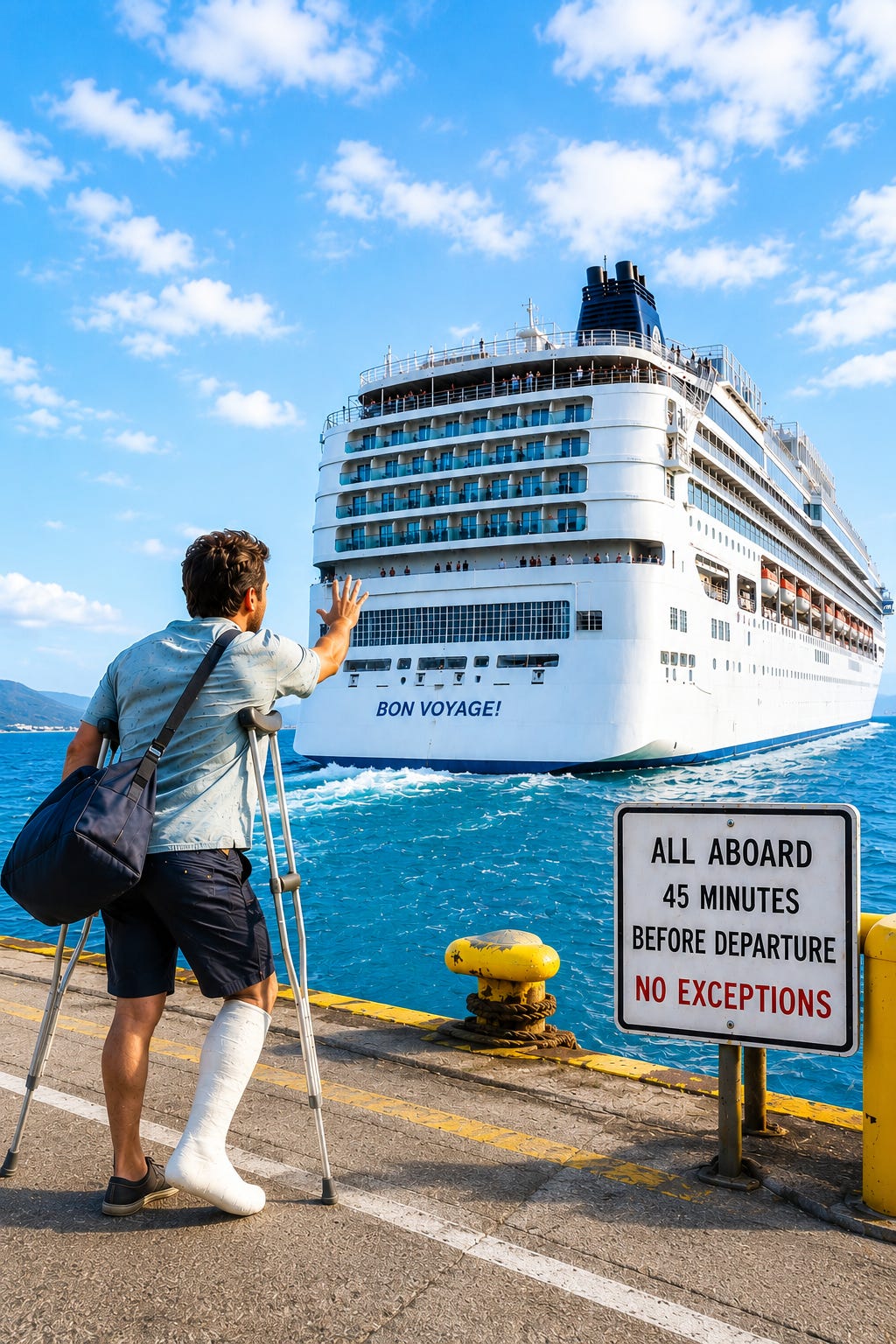
A cruise looks like a vacation. It is also a floating medical situation waiting to happen, a weather-dependent itinerary with zero flexibility, and a financial commitment with almost no refund protection if something goes wrong close to sailing date. We sailed the MSC Seashore in April 2026 and came home with a lot of opinions about the cruise industry, as we do after every cruise. One of the strongest is this: if you are getting on a ship without travel insurance, you are taking a risk that no amount of beautiful ocean scenery is worth.
The Medical Reality Nobody Talks About
Many U.S. health insurance plans have limited or no coverage abroad, and Medicare is especially limited outside the United States. If you need medical care onboard or at a port of call, you could be paying the entire bill out of pocket. Cruise ship medical centers handle basic care. They are not equipped for serious emergencies, and when something goes wrong at sea, evacuation alone can reach devastating costs without coverage.
A helicopter evacuation from a ship in the Caribbean to a hospital capable of treating a cardiac event can easily run tens of thousands of dollars. Those costs are not theoretical. Emergency medical evacuation can reach five or six figures depending on where you are, how far you need to be transported, and what kind of care you need. It is the documented real cost of emergency medical evacuation at sea, and it happens to healthy people who never expected it would happen to them. Recommended emergency medical coverage for cruises starts at $100,000, with medical evacuation coverage of at least $500,000. Those numbers sound large until you understand what they are protecting against.
The Ship Will Not Wait for You
Ships depart on schedule. That is not a guideline. It is a hard fact of the cruise industry, and it creates a risk that doesn’t exist with any other form of travel.
If your flight is delayed and the ship departs without you, catching up at the next port or absorbing the cost of missing the cruise entirely comes out of your pocket unless you have coverage. This scenario is far more common than people realize, and it is especially dangerous for travelers who fly in on embarkation day rather than arriving the night before. One weather delay, one mechanical issue, one gate change that costs you forty minutes, and the ship is gone.
Cruise travel insurance covers missed connections and helps cover the cost of catching up to the ship at the next port of call. Without it, you are booking a last-minute flight to a foreign city, arranging your own transfer to the port, and hoping the ship is still there when you arrive. The stress and expense of that situation is avoidable.
What Standard Travel Insurance Misses
Cruise travel insurance also covers something standard policies often don’t: missed ports and itinerary changes. If the ship can’t dock somewhere, you booked a private excursion to visit, a cruise-specific policy may reimburse that prepaid excursion cost. Weather reroutes happen constantly in the Caribbean, especially during hurricane season. A ship that skips Cozumel because of rough seas is not going to refund the $300 snorkeling tour you booked independently on shore.
That kind of coverage only exists in cruise-specific or comprehensive policies that explicitly address itinerary changes. Worth reading the fine print before you assume your standard travel policy has you covered.
The Cruise Line Plan Is Not the Same Thing
One of the most common mistakes travelers make is assuming the cruise line’s own protection plan is equivalent to comprehensive travel insurance. It is not.
Cruise line plans typically come with lower medical coverage limits, fewer covered reasons to cancel, and reimbursement in the form of future cruise credits rather than cash. That last point deserves emphasis. Future cruise credits are not your money back. They are obliged to book another cruise with the same line, on their schedule, under their terms. If you had a bad experience and have no interest in sailing that line again, a future cruise credit is worth exactly nothing to you. Third-party insurance pays in cash.
We experienced enough on the MSC Seashore to know we would likely not sail that line again. If we had purchased the cruise line’s own protection plan and something had forced a cancellation, we would have been left with a credit toward a product we had already decided wasn’t for us. That is not protection. That is a sales tool dressed up as peace of mind.
What It Costs and What It Covers
Comprehensive cruise travel insurance typically costs between 4% and 10% of your total insured trip cost. On a $5,000 cruise for two, that is $200 to $500. A solid policy at that price point covers trip cancellation and interruption, emergency medical expenses, medical evacuation, missed connections, baggage loss or delay, and itinerary changes.
Measured against what a medical evacuation or a missed embarkation could cost without coverage, it is one of the easier financial decisions in travel planning.
The Bottom Line
Get cruise insurance. Get it from a third-party provider, not the cruise line. Get it within 14 to 21 days of your first deposit to make sure pre-existing condition coverage applies. Make sure the medical and evacuation limits are high enough to actually protect you.
The ocean is beautiful. The industry that takes you to it has a lot of fine print. Go in with your eyes open and your family protected.
We recommend Allianz Travel Insurance based on personal experience. Trip Jar is not currently affiliated with Allianz and does not receive compensation from them. Always compare policies, read the plan documents, and choose coverage based on your own trip, budget, and risk.
Good advice....something I never thought about before!